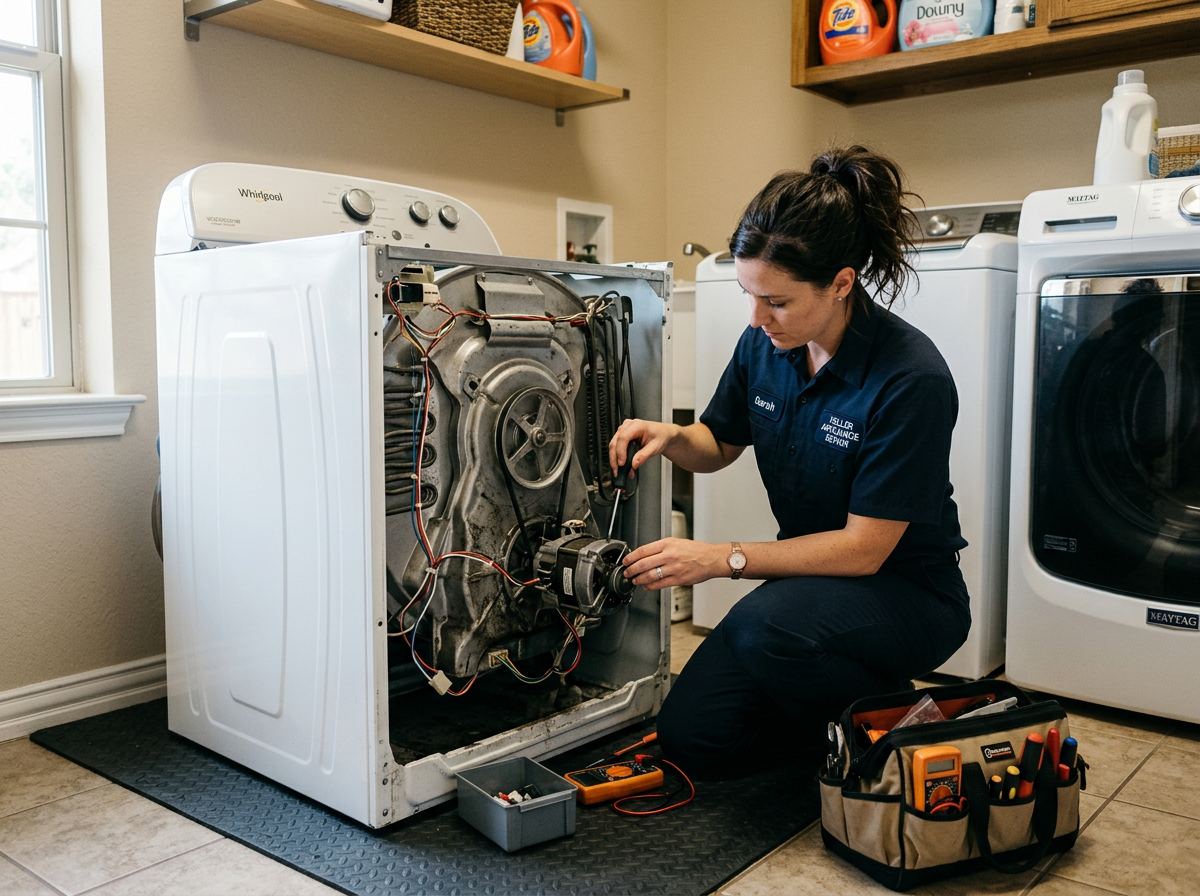
Keller’s humid subtropical climate brings hot, muggy summers that increase lint and moisture buildup inside dryer vents and drums. Homes in neighborhoods such as Hidden Lakes and Westpark, many built in the 1990s and early 2000s, often have longer vent runs that trap humidity and force the heating element to work harder. This leads to longer dry times and higher risk of overheating in Tarrant County households.
Bear Creek Appliance techs see frequent thermostat and sensor failures on units that run daily during the mild winters when residents still need quick drying after rain. Older homes near Keller City Hall and Bear Creek Park commonly have 240-volt electric dryers with worn belts and idler pulleys that stretch from years of use. Addressing these issues early prevents lint fires and keeps energy use in check across Southlake and Roanoke commuters.
Common Dryer Issues in Keller Homes
Homeowners in Saddlebrook and Westpark often overlook restricted exterior vents clogged by oak pollen and humidity. Restricted airflow trips high-limit switches and shortens element life. We check vent length, termination height, and material to meet local code and reduce fire risk.
Seasonal Factors Affecting Dryer Performance
Summer humidity in Tarrant County forces dryers to run longer cycles, wearing out sensors faster. Winter brings temperature swings that can crack plastic drums on older models. Regular vent cleaning every six months keeps units running efficiently year-round.
Technician insight
In Keller, the thing that catches most people out with Dryer Repair is the extra lint and moisture that builds up in long vent runs through attics in 1990s Hidden Lakes homes. Our humid summers keep the air damp, so even a clean-looking vent can trap enough humidity to trip safety switches and cook the heating element faster than in drier parts of Tarrant County.
Westpark Dryer Overheating
A Westpark homeowner reported clothes still damp after 90-minute cycles. We found a crushed exterior vent flap blocked by pollen and heavy lint inside a 25-foot run. After replacing the flap and clearing the line, the dryer finished loads in normal time with safe operating temperatures.
Dryer Repair Services We Offer
✓Heating Element Replacement
Replace failed electric heating elements that no longer reach full temperature due to humidity-driven corrosion common in Keller homes.
✓Dryer Vent Cleaning and Repair
Clear lint and moisture buildup from long vent runs typical in Hidden Lakes and Westpark properties to restore airflow and prevent overheating.
✓Thermostat and Sensor Repairs
Diagnose and replace faulty cycling thermostats and moisture sensors that cause extended run times during humid Tarrant County summers.
✓Drum and Belt Replacement
Repair or replace worn drums, belts, and idler pulleys on units in older Saddlebrook homes experiencing squealing and slow tumbling.
✓Gas Valve and Igniter Service
Service gas dryers common in Roanoke and Southlake homes, including igniter and valve checks for safe, consistent heat output.
How it works
- 1
On-Site Inspection
We arrive at your Keller address, check power or gas supply, and examine vent routing through the home’s exterior.
- 2
Component Testing
Technicians test the heating element, thermostats, and sensors with multimeters to pinpoint the exact failure.
- 3
Targeted Repair
We replace only the failed parts using manufacturer-grade components and clear any lint from the vent path.
- 4
Final Testing and Cleanup
The dryer runs through a full cycle while we verify temperature, airflow, and safety switches before leaving.
Pricing
Most dryer repairs fall in a mid-range cost depending on parts needed; we provide a clear quote after diagnosis.